Selecting the appropriate technology for mobile application development is a pivotal decision that impacts performance, user experience, and maintenance complexity. React Native and native app development are two popular approaches, each with its own set of advantages and challenges. Understanding their differences is essential for making an informed choice that aligns with your project goals.
Native App Development
Native app development involves creating applications specifically for a single platform, such as iOS or Android, using the platform’s native programming languages—Swift or Objective-C for iOS and Kotlin or Java for Android. This method ensures that the app is optimized for the platform it is built on, leveraging all the native features and providing the best possible performance.
Advantages of Native App Development
Superior Performance
Native apps are optimized for their respective platforms, resulting in smoother and faster performance compared to cross-platform solutions.
Enhanced User Experience
Native apps adhere to the platform’s design guidelines and standards, offering a more consistent and intuitive user experience.
Full Access to Device Features
Native development provides complete access to all the device’s features, such as the camera, GPS, and sensors, ensuring that these can be fully utilized.
Drawbacks of Native App Development
Higher Development Costs
Developing separate apps for iOS and Android can be time-consuming and costly, as it requires maintaining two distinct codebases.
Complex Maintenance
Managing updates and bug fixes for two separate codebases can be challenging and labor-intensive.
React Native Development
Facebook’s React Native framework allows developers to build mobile applications using JavaScript and React. It supports the creation of apps for iOS and Android from a single codebase, offering a middle ground between native and cross-platform development.
Advantages of React Native Development
Single Codebase
React Native enables developers to write code once and deploy it across both iOS and Android, significantly reducing development time and costs.
Reusable Components
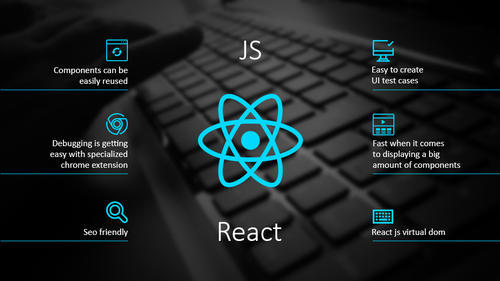
The framework promotes the use of reusable components, which can be shared across different parts of the app, speeding up development and ensuring consistency.
Rapid Development Cycle
Features like hot reloading allow developers to see changes in real-time, enhancing productivity and accelerating the debugging process.
Drawbacks of React Native Development
Performance Limitations
While React Native apps perform well, they may not match the high performance of fully native apps, particularly for graphics-intensive or complex tasks.
Limited Native Feature Access
Some native features may not be immediately available and might require additional effort to integrate through custom native modules.
Dependency on Third-Party Libraries
React Native relies heavily on third-party libraries, which can pose stability issues if they are not well-maintained.
Making the Decision
When deciding between React Native and native app development, consider the following factors:
Complexity of the Application
Due to its optimization capabilities, native development may be more appropriate for apps that demand high performance, complex animations, or intensive graphical processing.
Budget and Timeline
If budget and time constraints are significant, React Native’s single codebase approach can make it a more economical and faster option.
User Experience Goals
If delivering the best possible user experience with full access to all device features is crucial, native development might be the better choice.
Maintenance and Future Updates
React Native’s single codebase simplifies maintenance and updates, making managing and deploying changes across both platforms easier.
Conclusion
In conclusion, both React Native and native app development offer unique benefits and come with their own sets of challenges. The choice between the two should be based on your project’s specific needs and goals. By carefully weighing factors such as app complexity, budget, timeline, user experience, and maintenance requirements, you can select the most suitable approach for your mobile application development, ensuring it meets performance expectations and delivers a seamless user experience.
Source: https://www.hdwebsoft.com/blog/react-native-or-native-app-for-mobile-application-development.html



 Web Development Company in Vietnam